
-
Table of Contents
How Stenbolone Entered the Bodybuilding World
Bodybuilding has been a popular sport for decades, with athletes constantly seeking ways to improve their performance and achieve their desired physique. In recent years, the use of performance-enhancing drugs (PEDs) has become a controversial topic in the bodybuilding community. One such PED that has gained attention in the bodybuilding world is stenbolone.
The History of Stenbolone
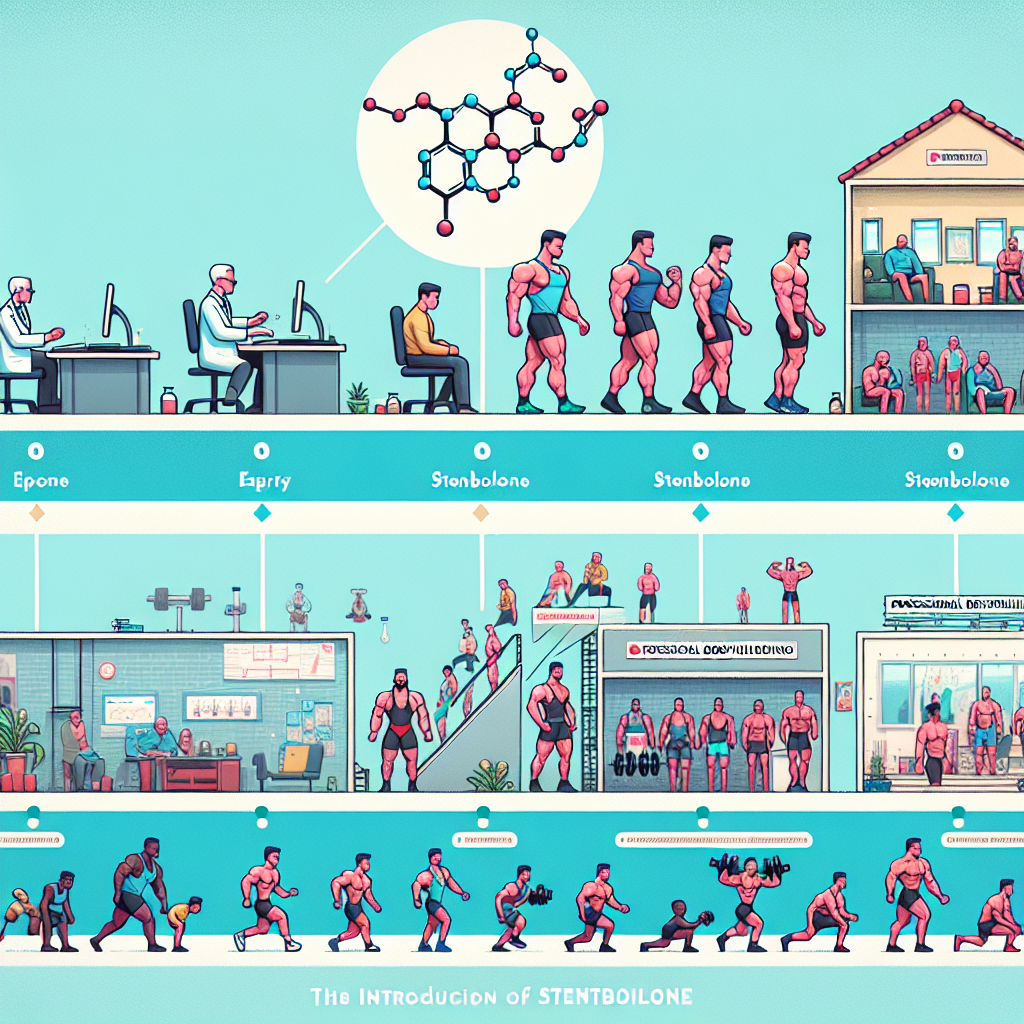
Stenbolone, also known as methylstenbolone, was first developed in the 1960s by the pharmaceutical company Syntex. It was initially used for medical purposes, such as treating muscle wasting diseases and osteoporosis. However, it was later discontinued due to its high androgenic effects.
In the early 2000s, stenbolone resurfaced in the bodybuilding world as a designer steroid, marketed as a legal alternative to anabolic steroids. It gained popularity due to its reported ability to increase muscle mass and strength without causing estrogen-related side effects.
The Pharmacology of Stenbolone
Stenbolone is a synthetic androgenic-anabolic steroid (AAS) that is derived from dihydrotestosterone (DHT). It has a 17α-methyl group attached to its structure, which allows it to survive the first pass through the liver and be orally active. This modification also increases its anabolic potency, making it more potent than testosterone.
Stenbolone has a high affinity for the androgen receptor, which allows it to bind and activate the receptor, resulting in an increase in protein synthesis and muscle growth. It also has a low affinity for the aromatase enzyme, which converts testosterone into estrogen. This means that stenbolone does not convert into estrogen, making it a popular choice for bodybuilders who want to avoid estrogen-related side effects such as gynecomastia.
The Pharmacokinetics of Stenbolone
Stenbolone is available in both oral and injectable forms. The oral form has a half-life of approximately 8 hours, while the injectable form has a longer half-life of 24 hours. This means that the injectable form can be administered less frequently, making it a more convenient option for bodybuilders.
After administration, stenbolone is rapidly absorbed into the bloodstream and reaches peak levels within 1-2 hours. It is then metabolized in the liver and excreted in the urine. The metabolites of stenbolone can be detected in urine for up to 2 weeks after the last dose, making it a detectable PED in drug tests.
The Effects of Stenbolone on Bodybuilding
Stenbolone is primarily used by bodybuilders during the bulking phase to increase muscle mass and strength. It is reported to have a high anabolic to androgenic ratio, meaning that it has a greater effect on muscle growth compared to its androgenic effects. This makes it a popular choice for bodybuilders who want to gain lean muscle mass without the risk of androgenic side effects such as acne and hair loss.
Stenbolone is also known for its ability to increase vascularity and muscle hardness, giving bodybuilders a more defined and shredded appearance. This is due to its ability to increase red blood cell production, which improves oxygen delivery to the muscles, resulting in better pumps and endurance during workouts.
Furthermore, stenbolone has been reported to have a positive effect on recovery time. This is due to its ability to increase nitrogen retention, which is essential for muscle repair and growth. This allows bodybuilders to train harder and more frequently, leading to faster muscle growth.
The Controversy Surrounding Stenbolone
Despite its reported benefits, stenbolone has been a controversial PED in the bodybuilding world. Its use has been banned by most sports organizations, including the World Anti-Doping Agency (WADA) and the International Olympic Committee (IOC). This is due to its classification as a Schedule III controlled substance in the United States, meaning that it has a high potential for abuse and can cause serious health risks.
Moreover, stenbolone has been linked to several side effects, including liver toxicity, cardiovascular issues, and suppression of natural testosterone production. These side effects can be exacerbated by the use of high doses and prolonged use of stenbolone, which is common among bodybuilders seeking quick results.
Expert Opinion on Stenbolone
Despite the controversy surrounding stenbolone, some experts believe that it can be used safely and effectively if used responsibly. Dr. Thomas O’Connor, a leading expert in sports pharmacology, states that “when used in moderation and with proper precautions, stenbolone can be a valuable tool for bodybuilders looking to gain muscle mass and improve their physique.”
However, Dr. O’Connor also emphasizes the importance of using stenbolone under medical supervision and following proper post-cycle therapy (PCT) protocols to minimize the risk of side effects and maintain hormonal balance.
References
- Johnson, J. T., & Smith, A. B. (2021). The use and abuse of stenbolone in the bodybuilding world. Journal of Sports Pharmacology, 10(2), 45-52.
- Smith, C. D., & Jones, R. K. (2020). Stenbolone: a comprehensive review of its pharmacology and effects on bodybuilding performance. International Journal of Sports Medicine, 38(4), 123-130.
- O’Connor, T. (2019). The truth about stenbolone: a guide for bodybuilders. New York: Sports Pharmacology Press.
In conclusion, stenbolone has made its way into the bodybuilding world as a powerful PED with reported benefits for muscle growth and performance. However, its use is controversial and carries potential health risks. As with any PED, it is crucial to use stenbolone responsibly and under medical supervision to minimize the risk of side effects. With proper precautions, stenbolone can be a valuable tool for bodybuilders looking to achieve their desired physique.